Skip to main
a head full of memories by
Timo Mämecke
Jump to navigation

7 posts in Meta

· 2 minute read

Ending the Season Images

In October I wrote a post about a little experiment I implemented. An experiement I wanted to build since I was a teen. Now I’m removing this experiment again.

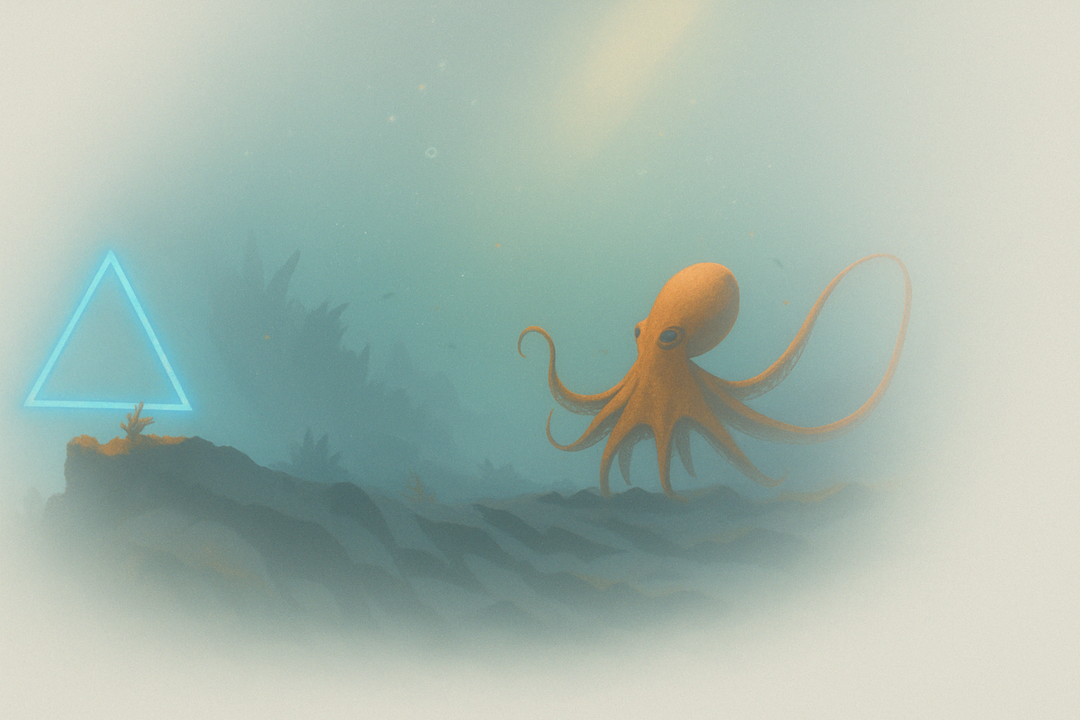
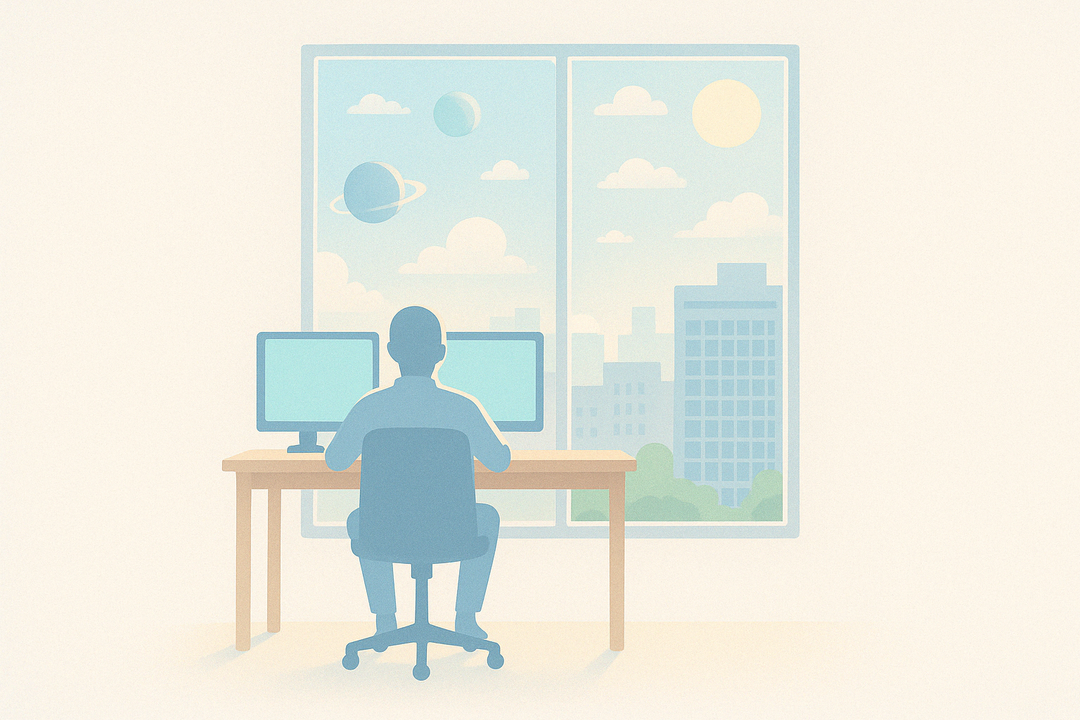
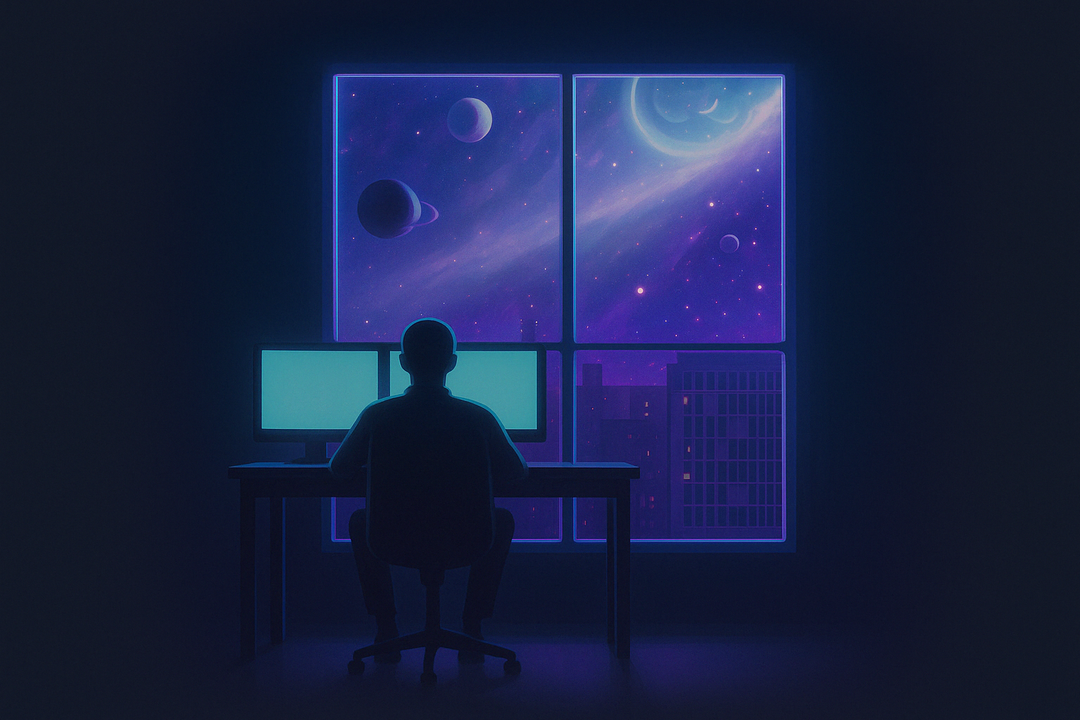
To recap in short, back in the days when I started to create websites, I was fascinated by the idea that the design of a website (or at least a header image) depicts its own little world, with its own simulated weather and urban scenes and people living there. So I did it, with AI, which renewed the header images every 6 hours.

The magic wore off kinda quickly. It was neat to see how it added little scenes around halloween, christmas and new years; but it was also predictable that it will create those scenes. Those special scenes weren’t actually special anymore. And over time, it felt like uninteresting noise. If an artist had created them, it would’ve been much more interesting. Even though it wasn’t 100% AI slop because it had an interesting twist to it, it was still: just AI. People don’t just care about the art, they care about the artist.

I never wanted to keep those images here forever, and I’m happy this idea is now out of my head.

Here are a few oopsies that happened during the experiment:

  • To simulate the weather, the AI is prompted with the weather it generated for the previous days, to create a new weather for “today”. It then uses this weather to write a new prompt for the actual image. But it started to write small scenes into the weather report itself, so it continued to reuse this same scene, and for a while all images were in a town with cobblestone streets and a church and a riverside.
  • The images need a vignette, which was added to the image in a second step: it first creates the image without the vignette, and then uses this image to generate another image with the vignette. I thought that OpenAI will automatically detect the image aspect ratio to generate a new image with the same ratio. But that was wrong, it started to create square images. So for a while, the vignetted images were weirdly cut off and too small.
  • During the React2Shell situation, the image generation halted because I didn’t redeploy the cron. While I updated the Next.js version in my monorepo, there were no changes to the cron (because it doesn’t use Next.js) and the deployment still had the vulnerable version of Next.js installed which we didn’t allow to run on Railway anymore.
  • The AI was prompted to create scenes in a german city. But it did not create fireworks at midnight 2025 → 2026, and no streets littered with fireworks, which is just unrealistic af.
· 1 minute read

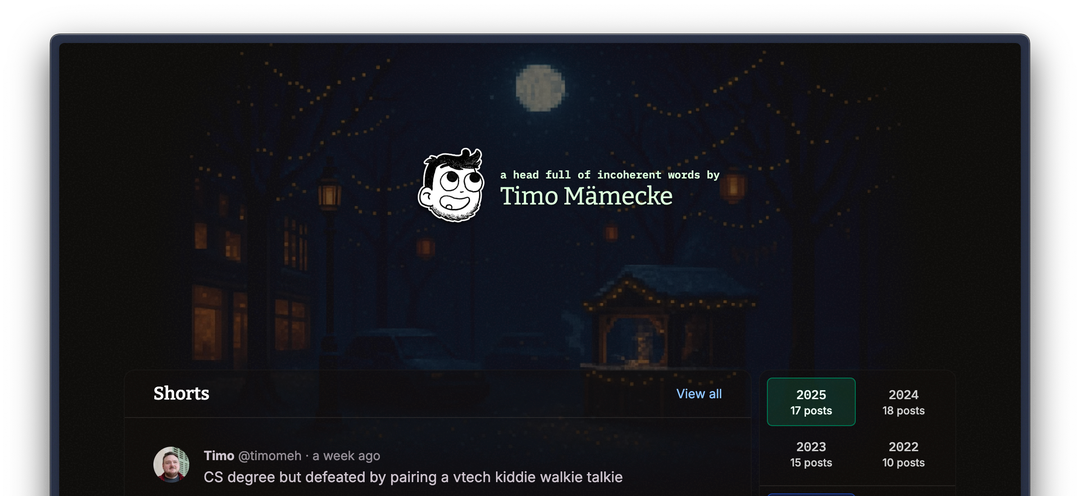
More than 15 years ago, I had this idea to autogenerate the header image of my website based on the current time of day, season, location, and a simulated weather pattern that naturally progresses. It fascinated me to have a long-running, realistic-feeling, autonomous system that changes itself without my involvement—like its own little world. I liked the idea to open my own site and being surprised by what I see. “Oh, it’s snowing!”, then seeing the snow melt away some time later, or observe the bleakness of misty autumn days.

Back then, I tinkered with layering PNGs on top of each other to create “random” scenes, but it looked terrible. I can design websites, but I can’t draw nice pictures.

I never ended up doing it because 1) I didn’t miraculously become a good artist, and 2) who cares.

Well, I care. I’m older now, and the fascination is definitely weaker, but I still thought about it every year. When my most favorite time of year starts, I get this itch. And this year, I finally scratched it.

AI made this much easier to solve. Not just for creating the images, but also for simulating the weather progression based on the time of day, the season, and previous days. Everything is now truly unpredictable, there isn’t a single line of code where I can already guess what will happen next.

New scenes get generated four times a day, and I feed the AI with previous days to create a natural progression.

I’m storing all the prompts, images and weather simulations (in a Railway Bucket of course).

· 1 minute read

Changelog, November 2024

I’ve motivated myself to write shorter posts more frequently! The previous list of headlines (which is now the Archive) added too much friction for writing down some content—not just because I had to come up with a title, but also because a short post on its own page felt a bit … lonely.

After 2 years of writing posts in GitHub Discussions, I’ve now switched to Keystatic. The writing experience is much better: it’s still in my browser, and the media handling is much better! Images and videos became a bit more cumbersome with GitHub Discussions. It wasn’t impossible, just a bit annoying. And that extra friction became an excuse to not writing down some thoughts I had.

I might have been just a wee bit too excited to release this new version. There are some minor tweaks here and there to improve, but pfft, that’s continuous deployment for you!

· 1 minute read

I felt like posting random stuff sometimes. Not only babble about software development tips. So I added this new Offtopic section. Although I called it Stream in the Sidebar because Offtopic is a long word?

Anyways, what started with a new category ended in a switch from Markdown to MDX and a dark mode, mainly because I’m often looking at my blog at night and it hurt me poor eyes. I’m not completely done, there are a few things I’d like to add and improve, but shipping is good.

I imagined some cool aurora borealis vibes going on, but didn’t yet spent too much time in Figma to make it a bit more like I imagined. I need to change some pictures of previous posts to fit into the dark theme. And some old posts were moved into the Offtopic section because it made more sense. In summary: things happened.

· 1 minute read

Robin Rendle: “Take Care of Your Blog”

In his blog post Take Care of Your Blog, Robin Rendle wrote some career advice:

Blog your heart! Blog about something you’ve learned, blog about something you’re interested in. Blog about cameras or HTML or that one browser bug you’ve noticed this morning […]

Ignore the analytics and the retweets though. There will be lonely, barren years of no one looking at your work. There will be blog posts that you adore that no one reads and there’ll be blog posts you spit out in ten minutes that take the internet by storm.

That’s exactly the philosophy I want to follow here. And that’s also the reason why I focused on building a blog which allows me to publish content as frictionless as possible.1

Chris’ blog inspired me to finally start blogging again. His blog is a mixture of smaller and larger development topics, mixed with other thoughts and stories from his life. Sometimes I messaged him with some small development thoughts or things I learned that day, and he often responded with “that would be a nice little blog post”.

And he’s right! You just need to overcome the thoughts “that’s not worthy of publishing” and “nobody cares”. At least I had to overcome them.

Footnotes for Section Heading

  1. Footnote 1: shameless plug to my first post: How to Build a Blog
· 4 minute read

How to Build a Blog

When I was a teen, I learned how to build WordPress themes. During holidays or when school was out, I vividly remember how I sometimes sat in front of my computer for a few days and nights, and created new themes for my blog. Of course I had no blog, but having one was a cool thought. But this stuck to me, and I was really never happy with how my blogs work. Until now!

Read more